
Wild Paphos: Akamas, Gorges, Sea Caves & Where to Swim Wild (2026)
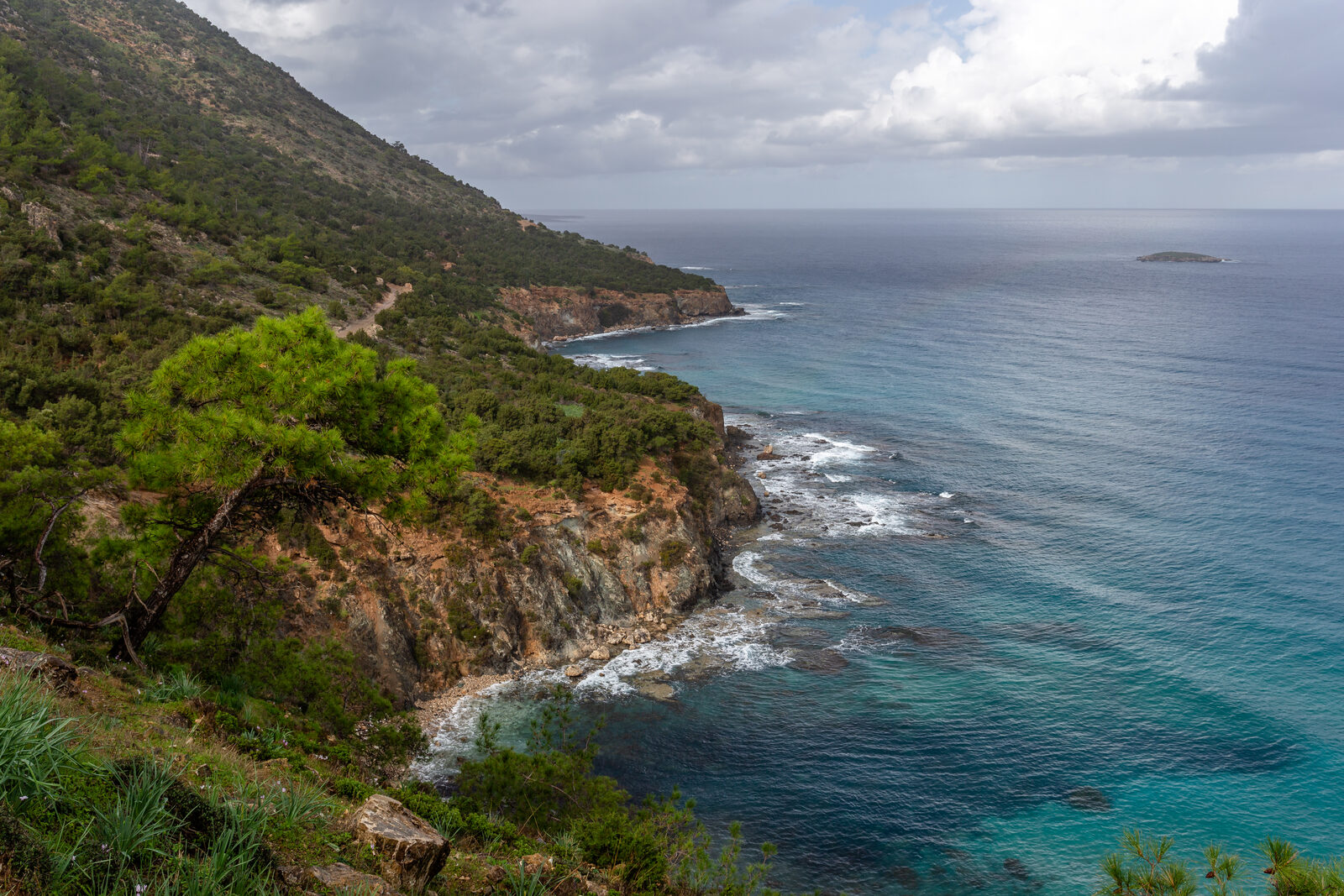
Most people know Paphos for its harbour, its mosaics and its resort strip. But drive twenty minutes in almost any direction and the map runs out of hotels and into something older and wilder — a peninsula of empty coves and turtle beaches, a gorge you can walk through with rock walls closing in overhead, sea caves carved out of the cliffs, and a cedar forest in the hills where wild mountain sheep still roam. Here's where to go, when, and how to do it without getting caught out.
Quick answers
- What is the wildest part of Paphos?
- The Akamas Peninsula National Park, northwest of the city — undeveloped coast, the Blue Lagoon, Lara turtle beach and two well-marked nature trails.
- Where is the Blue Lagoon in Cyprus?
- On the far (northeast) side of the Akamas, reached by boat from Latchi harbour or by 4x4 along the rough Akamas track. It's a shallow, sheltered, exceptionally clear bay — the calmest wild swim near Paphos.
- Is Avakas Gorge open?
- Treat it as closed for 2026 until you confirm locally — the Forestry Department shut it after rockfalls in late 2025 and it had not reopened as of spring 2026. Check before you plan around it.
- Can you swim at the Peyia Sea Caves?
- Yes, in calm conditions and only if you're a confident swimmer — there are no steps, ladders or facilities. It's a jump-and-scramble spot, not a lifeguarded beach.
- When is best for wild Paphos?
- Spring (April–May) and autumn (September–October) — cooler for the trails, the sea still warm, and the wildflowers out in spring. High summer is fierce on the exposed coast; carry far more water than you think.
1The Akamas Peninsula — where the road runs out
The Akamas is the last genuinely undeveloped stretch of coast in Cyprus: no resorts, no beach bars, just scrub-covered hills dropping to a clear sea. It only became a national park in recent years, and the extra protection is doing real work to hold back development. It's home to a remarkable amount of life for somewhere this dry — 35 of Cyprus's 142 endemic plant species grow here, including wild orchids and, for a few weeks each spring, the endangered Cyprus tulip. Much of it survived precisely because it was left alone: the peninsula was used for British military exercises for decades, which kept the developers out. You can take the Akamas gently — a short walk from the car park at the Baths of Aphrodite, a coffee at the café, a paddle — or properly, on one of the signposted nature trails (see section 3). Either way, this is exposed country. Bring more water than feels sensible, a hat, and start early in summer.
2The Blue Lagoon — the calmest wild swim near Paphos
The jewel of the Akamas is the Blue Lagoon: a shallow, sheltered bay on the far side of the peninsula where the water turns every shade of turquoise and there's barely a ripple. National Geographic photographed it as "a famous beauty spot framed by rocky formations," and that's exactly it — a natural swimming pool ringed by pale rock. You reach it two ways:
- •**By boat from Latchi harbour** — the easy option. Boats moor in the bay and you swim or snorkel straight off the deck. Best for families or anyone not keen on the track.
- •**By 4x4 along the Akamas track** — a rough, unsealed road. Fine in a proper high-clearance vehicle, punishing in a normal hire car. Don't attempt it in a small saloon; people do, and regret it.
Bring: Reef-safe sunscreen and a mask — the fish come right in to the shallows.
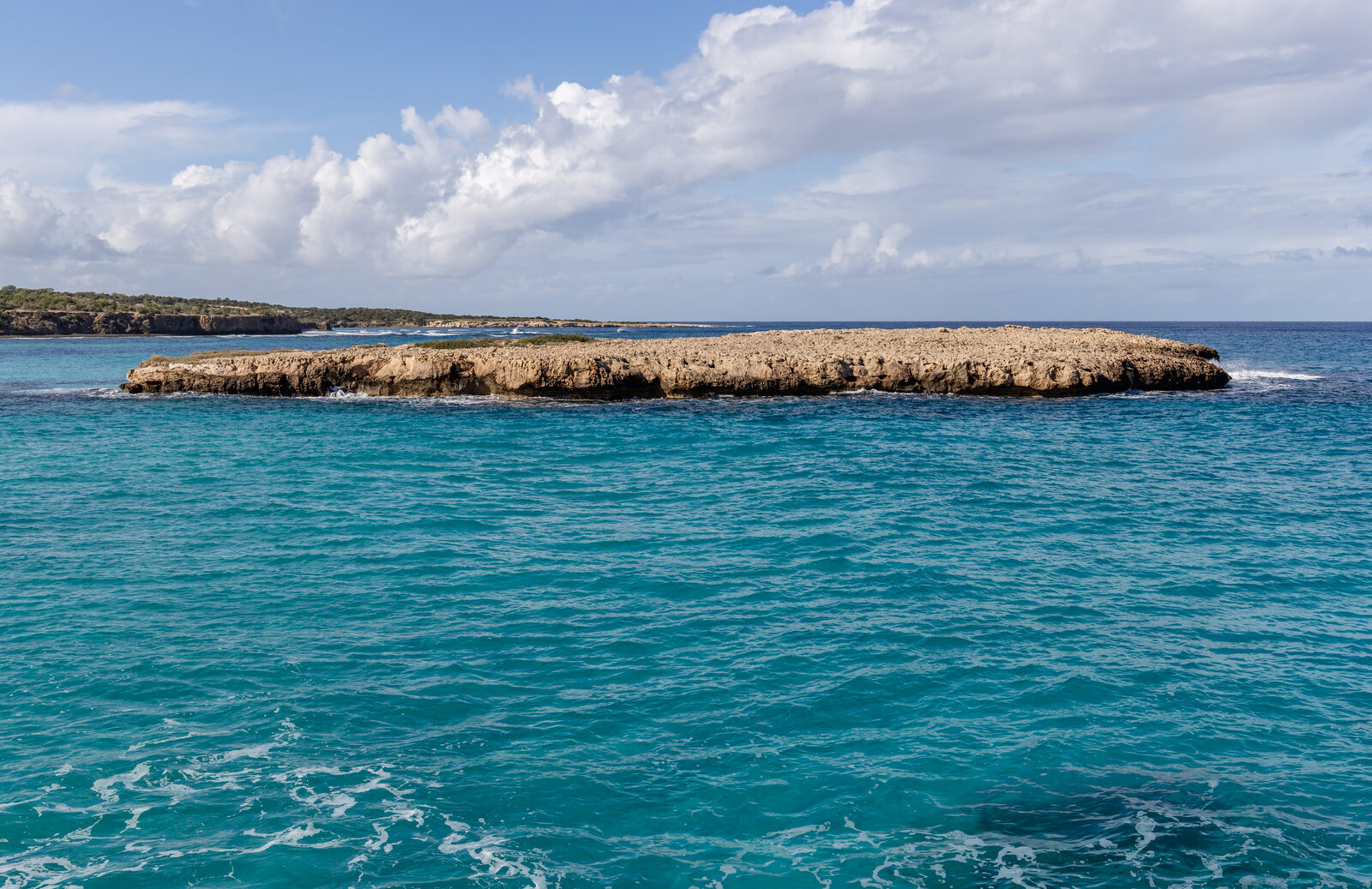
Photo: Michal Klajban, CC BY-SA 4.0 (Wikimedia Commons)
3The nature trails — Aphrodite and Smigies
If you'd rather walk than drive, two waymarked loops climb from Neo Chorio into the hills above the coast: the Aphrodite and Smigies nature trails. The Aphrodite trail is the classic — steep and brutally exposed in places, but it opens onto some of the finest coastal views on the island. The air changes as you climb: down on the coast it's wild oregano and juniper; the reward at the top is the whole sweep of the peninsula below you. One honest warning, straight from the Paphos naturalist quoted by National Geographic: it is not a July walk. Do these trails in spring or autumn, or at first light in summer. Take water, and don't rely on shade — there's very little.
4Avakas Gorge — check before you go
The Avakas Gorge is the wild walk everyone wants to do: a streambed threading between limestone walls that rise hundreds of feet and close in until a single boulder is wedged between them overhead. On its day it's spectacular.
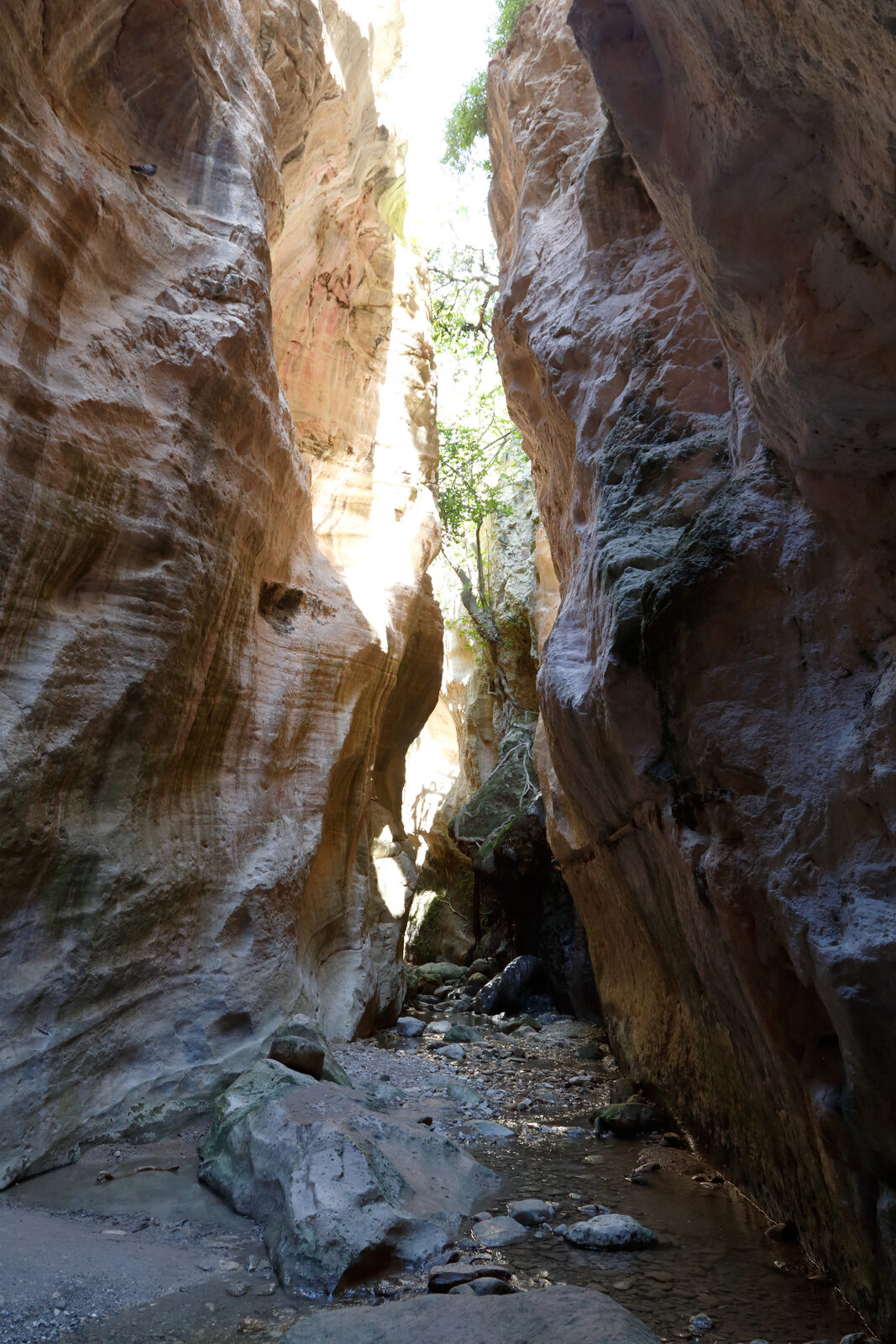
Photo: Dm Bsg, CC BY 3.0 (Wikimedia Commons)
5The Peyia Sea Caves — dramatic coast, easy to reach
Just past Coral Bay, the coastline north of Peyia breaks into a run of arches and hollows carved out of the rock — the Peyia Sea Caves. Unlike the Akamas, you can drive almost to them: park up top, walk to the edge, and watch the sea surge in and out of the caverns below. For confident swimmers in calm water, there are small coves here to slip into — this is the "hidden coves" idea people talk about, made real and only ten minutes from the resorts. But be clear-eyed about it: there are no steps, no ladders, no lifeguards and no facilities. Getting in and out is a scramble over rock, and the sea can turn quickly. Go in calm conditions, never alone, and never with young children in the water.
6Adonis Baths Waterfalls — the wild swim with a legend
Back inland, above Coral Bay, a waterfall tumbles into a natural pool at the Adonis Baths — the spot where, legend says, Aphrodite met her lover Adonis. It's a lovely, low-key wild swim, and popular for it. Two practical notes save the day here: entry is ticketed and cash only (around €15 for adults, €10 for children), and the access road is rough — a slow, bumpy final stretch that's much happier under a higher car. Don't trust your sat-nav out here; it routinely misroutes. Follow the brown signs from Tala or Coral Bay and you'll find it easily.
7Lara Beach — where the turtles nest
Down the same rough track that punishes hire cars all the way to the end of the Akamas sits Lara Beach — one of Europe's largest nesting sites for endangered green and loggerhead turtles. Through the summer the turtles come ashore at night to lay; conservation volunteers mark and cage the nests, and in some years move the eggs to a hatchery to give the babies a better chance at the sea. If you're here in late August or September you might catch tiny hatchlings making their dash to the water. It's a protected conservation zone with no facilities — bring everything with you, tread carefully around the marked nests, and never dig or disturb the sand. It's one of the most genuinely moving wild things you can see near Paphos, and it costs nothing.
8Cedar Valley & the wild mouflon — the big day out
For the wildest corner of all, head inland into the Paphos Forest to Cedar Valley — a hidden valley thick with Cyprus's native cedar and home to the mouflon, the wild mountain sheep that is the island's national animal. Spotting one takes luck and a quiet approach (dawn and dusk are best), but even without a sighting it's a cool, pine-scented escape from the coastal heat. It's further than everything else here — a winding mountain road, so make a day of it, take a picnic and fill the tank before you go. As the Nat Geo writer found in these same hills, the driving is slow by design and there's rarely a direct route; the mountain roads loop extravagantly around the valleys. Which is the point. Or, in the words of a passage of Lawrence Durrell's that he quoted on the trail: "Nothing must be done in a hurry, for that would be hostile to the spirit of this place."
Wild Paphos in one trip
The best thing about wild Paphos is how close it all sits. From a base in or near the city you can be at a turtle beach, a waterfall, a gorge or the edge of the Akamas inside half an hour — one wild morning, one easy beach afternoon, and back for dinner. Spring and autumn are the sweet spot: the sea's still warm, the trails aren't an ordeal, and you'll often have the wild bits close to yourself. Whatever you do out there: carry more water than you think, respect the closures and the conservation signs, and don't be the person who takes a saloon car down the Lara road.
Frequently Asked Questions
Want to know more about the author?
Meet DemetriShare This Article
Continue Reading
Cyprus in Winter: Why a Holiday Rental is Better Than a Hotel
Discover why a private holiday rental in Cyprus beats hotels during winter for cost and comfort.
Read More
Best Neighborhoods in Paphos: The 2026 Guide for Expats & Investors
Compare Universal, Kato Paphos, Peyia, Konia and Chloraka — rental yields, prices, and lifestyle insights for 2026.
Read More
Is Cyprus Safe in 2026? Holiday Safety Guide for Tourists
Despite regional headlines, Cyprus is a stable EU destination. Practical safety guide for families, solo travellers, and couples.
Read More